
Corporate website: www.HospiCorp.com
888.509.3732
info@hospicorp.com

Patients & Caregivers

Looking for quicker and more effective sympton management for an end-of-life patient?

The Macy Catheter® might be the answer.
patient

When should the Macy Catheter be considered as an option?

The rectal route of administration is ideal for rapid control of severe symptoms.

This route is especially relevant when a patient has
difficulty swallowing or when the oral route is
otherwise compromised.

Symptoms may include:

Pain

Agitation

Shortness of breath

Fever

Seizures

Nausea and vomiting

  • Introducing the Macy Catheter to Patients & Caregivers

    This video provides an introduction of the Macy Catheter for patients and caregivers, including when and why the device should be used. Clinicians can also use this video to help introduce the Macy Catheter to their patients.

    More Instructional Videos

Wondering how to get the Macy Catheter for yourself or for your loved one?

The Macy Catheter requires a prescription, so you’ll need to get the catheter from a healthcare provider. We can recommend hospice and palliative programs near you that utilize the Macy Catheter.

How It Works

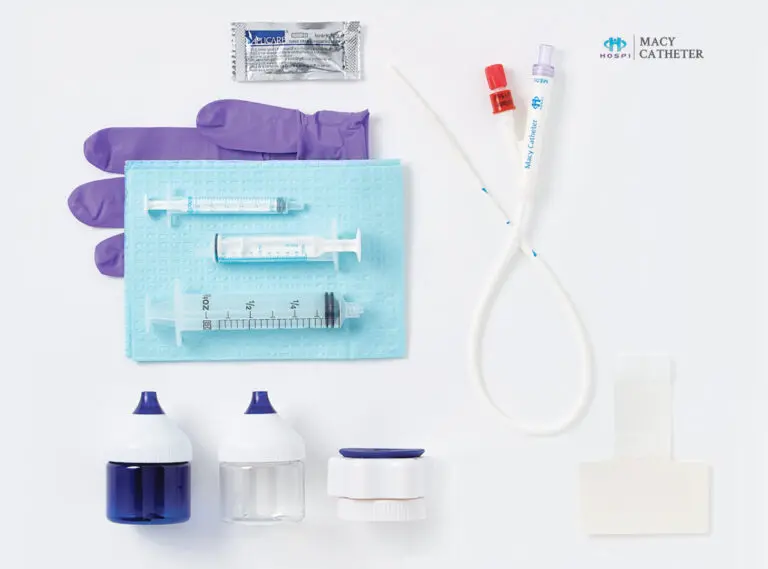
The Macy Catheter makes it easy to administer oral medications already at the bedside in a dignified manner.

  • Introducing the Macy Catheter to Patients & Caregivers

  • Using the LiquiPill

  • Using the Macy Catheter

  • Introducing the Macy Catheter to Patients & Caregivers

    This video provides an introduction of the Macy Catheter for patients and caregivers, including when and why the device should be used. Clinicians can also use this video to help introduce the Macy Catheter to their patients.
  • Using the LiquiPill

    Learn how to use the LiquiPill to grind medications into a fine powder that can be mixed with water and administered.
  • Using the Macy Catheter

    Learn what the Macy Catheter is and exactly how it is used by clinicians and caregivers across the country to administer medications.

More Instructional Videos

Product Information

A selection of fact sheets that explain why the Macy Catheter can be the best method of administering medications to hospice patients:

  • Fact Sheet

    Discover how the Macy Catheter helps hospices provide excellent clinical care in both the home and inpatient settings
  • A preview of the Clinical Sheet downloadable PDF file

    Clinical Sheet

    This one-pager provides a concise introduction to the Macy Catheter. Learn what the Macy Catheter is, how and when to use it, and why it works
  • Macy Catheter Benefits

    Macy Catheter Benefits

    Learn why the Macy Catheter might be a good option for you, for your family member, and/or for your practice.
  • How the Macy Catheter Decreases Cost & Nursing Time

    How the Macy Catheter Decreases Cost & Nursing Time

    Discover how the Macy Catheter can reduce medication cost and waste while improving nursing efficiency.

Caregivers Appreciate the Macy Catheter

Hear from clinicians and caregivers across the country who have used the Macy Catheter to help alleviate patients’ symptoms.

  • How could I say ‘no’ to hope?

  • Operational Improvements at Unity Hospice

  • Peace of Mind for a Family Caregiver

    Geraldine shares her experiences with caring for her sister and the way that her loved one’s pain affected her as a caregiver. A hospice nurse presented her with the Macy Catheter as an option that could help ease her sister’s pain.
    Geraldine Wolfolk
    Caregiver
  • A Hospice Nurse Explains How the Macy Catheter Empowers Nurses

    Desiree explains how the Macy Catheter empowers nurses at her practice by helping them manage severe symptoms quickly and easily.
    Desiree Avilez, RN
    Hospice Nurse | Hill Country Memorial Hospice
  • Hospice Uses the Macy Catheter to Decrease Cost & Nursing Time

    Nurses and administrators at Unity Hospice explain how replacing CADD pumps with the Macy Catheter improved patient care while decreasing cost and nursing time.
    Dr. Amy James, MD – Medical Director
    Tara L. Kerscher, RN – Home Care Nurse
    Ida A. Fameree, RN – Inpatient Residence Nurse
    Angie L. Ott, RN, CHPN – Nursing Educator & AHA BLS Instructor

More Testimonials

Which medications can be used via the rectal route?

Most medications used for symptoms such as pain, nausea, agitation, and shortness of breath and even some antibiotics can be given effectively with rapid onset of action via the rectal route.

Hospi has curated a list of medications and bioavailability as reported in the literature.

Do I need to change dosing when using the Macy Catheter?

Sometimes, depending on the medication. Dosing is the same as oral for the majority of medications.

The prescriber is responsible for the route and the dose of delivery. If you have specific questions, ask a pharmacy specialist.

Hospi has curated a list of medications and bioavailability as reported in the literature.

Which fluids can be administered via the Macy Catheter and at what rate?

Per the literature, hypotonic solutions such as water, Pedialyte, ½ NS, and ¼ NS are typically used, and infusion rates of 250ml/hr are tolerated well.

Hospi’s Policy and Procedure template includes a fluid administration procedure.*

The template is for illustrative purposes only. Further modification by the agency and its prescribers is intended/expected.

Hospi’s Clinical Team can answer further questions.

24/7 clinical support

or

  • Transforming Medication and Fluid Administration in Post Acute Care

    Transforming Medication and Fluid Administration in Post Acute Care

    A review of the practical application of rectal delivery using the Macy Catheter in hospice and palliative care

    More Publications

history of the macy catheter

History of the Macy Catheter

The Macy Catheter was invented by Brad Macy, a veteran hospice nurse and the recipient of 2013’s National Hospice and Palliative Care Nurse of the Year Award.

His inspiration to invent the device came directly from a memorable patient interaction.

Our Story